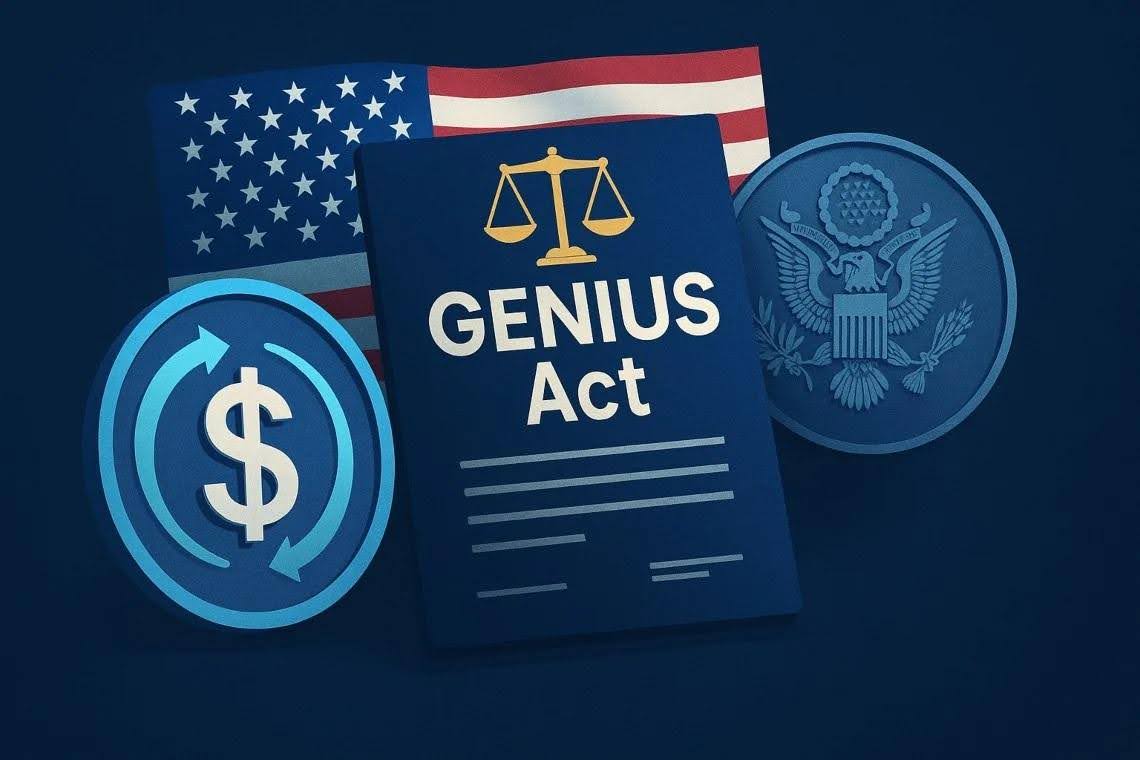
(HedgeCo.Net) Regulation in crypto is no longer just a threat: it’s morphing into a structural pillar. In the U.S., landmark rules and bills have begun to carve out how digital assets are treated in the financial system. Encyclopedia Britannica+1
What’s new
- The GENIUS Act (Guiding and Establishing National Innovation for U.S. Stablecoins Act) was passed in 2025 and clarifies that payment stablecoins are not securities, shifting regulation toward banking regulators. JD Supra+1
- Regulatory pieces from the Securities and Exchange Commission (SEC) and the Commodity Futures Trading Commission (CFTC) are aligning, with clearer guidance on crypto asset registered products, digital-asset exchanges, and the classification of tokens. JD Supra
- Globally, frameworks such as the Markets in Crypto?Assets Regulation (MiCA) in Europe are further embedding crypto into recognised financial-market regulatory regimes. ESMA
Why this matters
- Regulatory clarity reduces one of the largest risks for institutional investors entering crypto: policy uncertainty.
- By defining stablecoins, tokens, and derivative products more clearly, business models can evolve more safely — e.g., banks or fintechs can plan infrastructure rather than just speculate.
- At the same time: clarity brings higher compliance cost, tighter oversight — smaller players may struggle.
What to watch
- How quickly regulators execute detailed rules: e.g., how the GENIUS Act is translated into rule-making, supervision, enforcement.
- Whether tokens that were previously in regulatory grey zones come under new oversight or are grandfathered.
- How global coordination plays out: will the U.S., Europe, Asia move in sync or diverge?
Takeaway
The message for crypto: regulation is not just coming — it’s here. For participants who adapt, this may open new corridors of legitimacy and capital; for those who treat it as an afterthought, risk may increase.