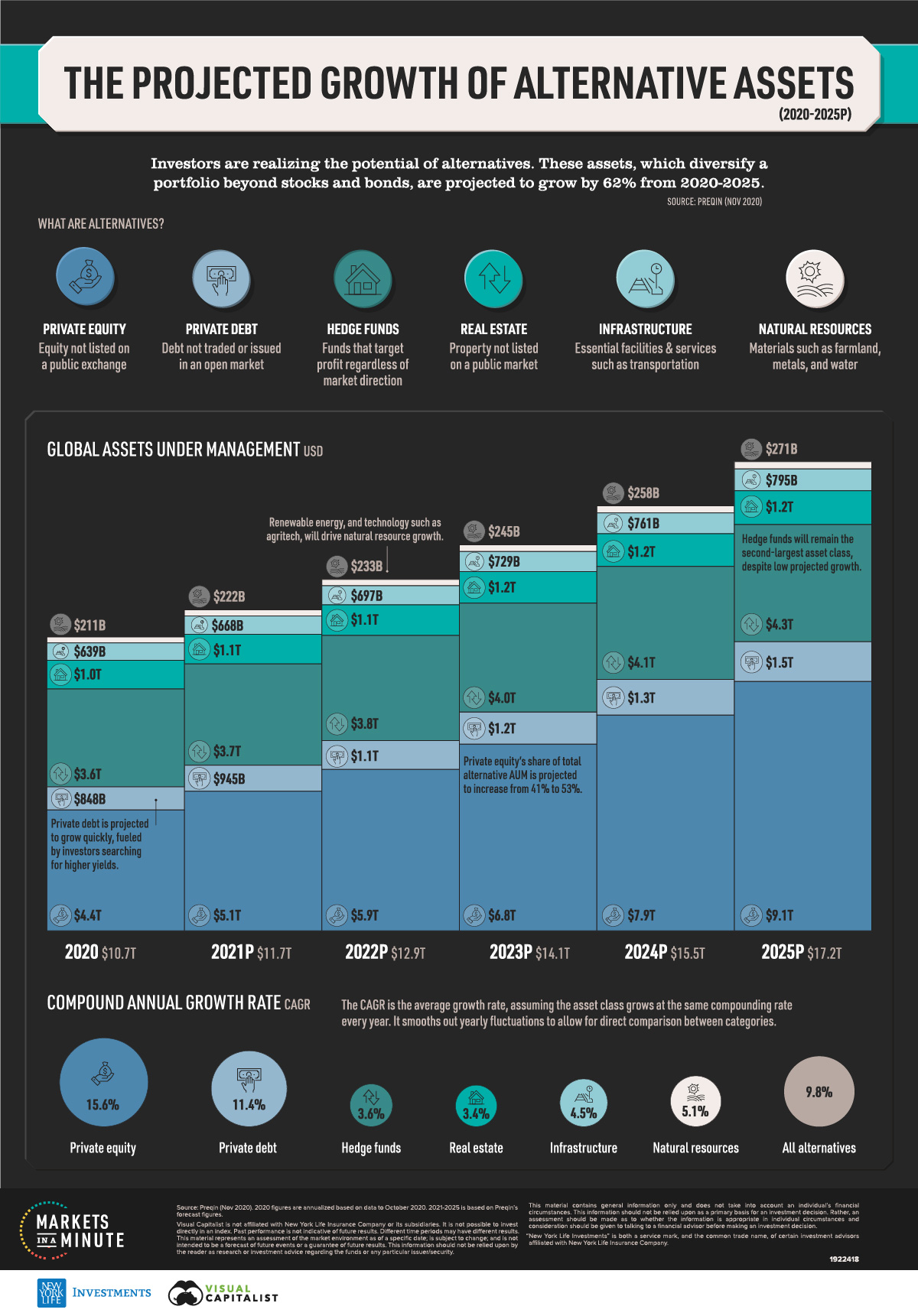
(HedgeCo.Net) A recent industry report highlights that the U.S. alternative-asset sector — including hedge funds and liquid alternatives — is undergoing deep structural change: from a niche institutional silo to a broad-based pillar of the capital markets. CBH
Key findings from the report:
- Alternatives expanded from roughly US$7.2 trillion in AUM in 2014 to over US$20 trillion in the U.S. by 2025, illustrating nearly a three-fold increase in a decade. CBH
- Hedge-funds and liquid alternatives in particular have diversified in business-model, structure and distribution channels — meaning they are accessible not only to institutions, but to wealth- and retail investors via registered vehicles.
- Innovation in product types (e.g., interval funds, registered alternatives) and distribution (advisors, platforms) is broadening access and reducing traditional barriers.
Strategic implications:
- The democratization of alternatives means more investors will face choices around hedge-fund style exposures, simpler access, but also more responsibility around manager selection and fee awareness.
- For asset managers, scale, operational excellence and transparent strategy articulation become differentiators — as the market grows, competition intensifies.
- This shift could exert downward pressure on fees, or prompt value-added service/strategy differentiation among hedge-funds and liquid-alts.
Risks to monitor:
- As alternatives become more mainstream, there is potential for “crowded trades”, strategy convergence and correlation creep — reducing the very diversification benefit that makes them attractive.
- Retail investors may underestimate complexity or risks (liquidity, leverage, model risk) of alternative-style strategies disguised in simpler wrappers.
- Regulatory, valuation and transparency challenges remain — especially as product innovation continues to accelerate.
Conclusion:
The narrative for alternative investments is shifting: no longer the preserve of hedge funds and institutional LPs, the space is expanding into everyday portfolios. But with opportunity comes responsibility — for investors to understand what they’re buying, and for managers to deliver genuine value rather than simple novelty.